Hernia in Women Don’t Ignore That Nagging Pain
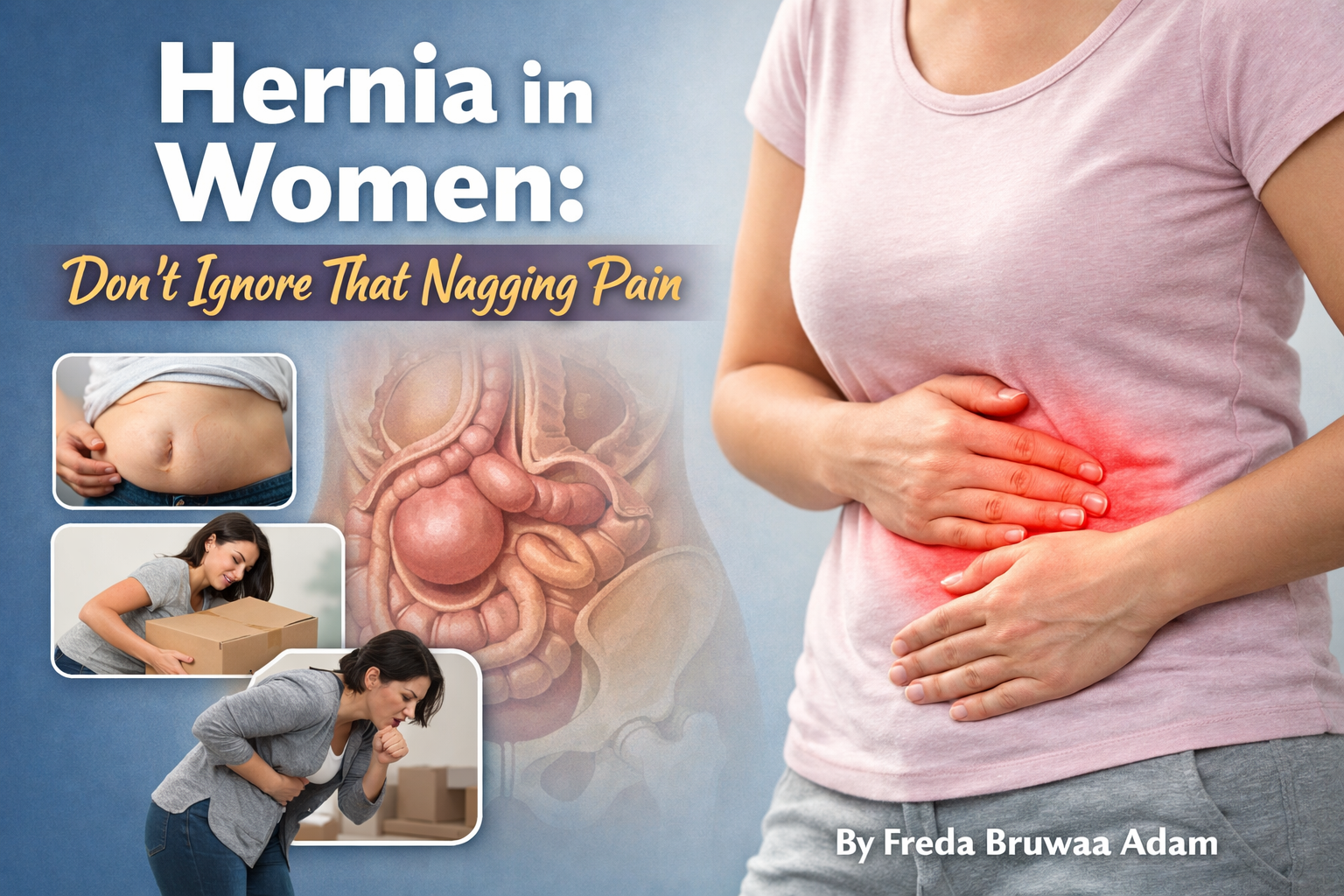
Many women dismiss persistent abdominal discomfort as a normal part of life, a consequence of childbirth, monthly cycles, or simply getting older. But sometimes, that nagging ache or unexplained lump is something that deserves medical attention: a hernia.
“Do you not know that your bodies are temples of the Holy Spirit, who is in you, whom you have received from God? You are not your own; you were bought at a price. Therefore, honor God with your bodies.” 1 Corinthians 6:19–20 (NIV) |
As people of faith, we believe that our bodies are not our own; they are sacred gifts from God, temples of the Holy Spirit entrusted to our care. Taking our physical health seriously is not a distraction from our faith; it is an expression of it. When we neglect the warning signs our body sends us, we risk failing in our stewardship of the life God has given us.
When most people think of hernias, they picture a man lifting something heavy and wincing in pain. This common misconception means that hernias in women are frequently overlooked, misdiagnosed, and left untreated for far too long. The truth is, hernias can and do affect women, and knowing the signs could make all the difference for your health and well-being.
A hernia occurs when an internal organ or tissue pushes through a weak spot in the surrounding muscle or connective tissue wall. In women, this most often affects the abdominal area, the groin (inguinal hernia), or the upper stomach (hiatal hernia). While some hernias are small and cause little discomfort, others can grow over time and lead to serious complications if not addressed.
Hernias in Women: The Numbers Don't Lie
In Ghana, approximately 30 out of every 100,000 women undergo hernia surgery each year, compared to 98 per 100,000 men, but this gap does not mean women are less affected. It more likely reflects how often women's symptoms go unrecognized or untreated. Consider these figures:
- 1 in 15 pregnant women develop an umbilical hernia
- Femoral hernias affect women in 88.6% of cases
- Incisional hernias account for 52.9% of hernia cases in women
- Umbilical hernias make up 32% of cases among women seeking surgical care
- Over 80% of female hernia patients are aged between 21 and 40, the most active and productive years of a woman's life
What Causes a Hernia in Women?
Hernias develop when the muscles of the abdominal wall become weakened or stretched, creating an opening through which tissue can protrude. For women, several specific factors can contribute to this weakening:
Pregnancy
The physical demands of carrying a baby place enormous pressure on the abdominal muscles. As the uterus expands, the abdominal wall stretches and can weaken significantly. This is especially true for women who have had multiple pregnancies or who experienced diastasis recti, the separation of the abdominal muscles. Even after delivery, these muscles may not fully recover, leaving a vulnerability that can develop into a hernia over time. The miracle of bearing life is a divine privilege, and it is wise to take special care of your body during and after this season.
“I praise you because I am fearfully and wonderfully made; your works are wonderful, I know that full well.” Psalm 139:14 (NIV) |
Obesity
Carrying excess body weight increases the pressure placed on the abdominal wall over a sustained period of time. This constant strain can cause the muscles and connective tissue to gradually weaken, making hernias more likely to develop. Maintaining a healthy weight is both a medical and a spiritual responsibility—one that honors the body God has given us. If you are struggling in this area, know that you are not alone and that seeking support medically, practically, and through prayer is a sign of strength, not weakness.
Heavy Lifting and Physical Strain
Lifting heavy objects repeatedly without proper technique, or when the core muscles are already weakened, significantly raises the risk of developing a hernia. Even chronic straining due to constipation or a persistent cough can have a similar effect over time. Many women who serve faithfully in their homes, their workplaces, and their churches carry heavy loads, both literally and figuratively. Learning to care for your physical body is just as important as the care you give others.
Other contributing factors may include a family history of hernias, previous abdominal surgeries, and the natural aging process, which causes muscles and connective tissues to lose some of their strength and elasticity.
Signs to Watch Out For
“Dear friend, I pray that you may enjoy good health and that all may go well with you, even as your soul is getting along well.” 3 John 1:2 (NIV) |
God’s desire for us encompasses our whole being—body, soul, and spirit. Paying attention to what our bodies are telling us is not vanity; it is wisdom and good stewardship. Here are the warning signs of a hernia you should never ignore:
- A noticeable lump or bulge in the abdomen or groin that may disappear when you lie down
- Dull aching or sharp pain in the affected area, especially when coughing, sneezing, lifting, or bending over
- A feeling of heaviness or pressure in the lower abdomen or pelvis
- Discomfort that worsens throughout the day or after prolonged standing
- Nausea or digestive discomfort in the case of hiatal hernias
Important: If you experience sudden, severe pain, vomiting, or the lump becomes hard and cannot be pushed back in, seek emergency medical care immediately. This could indicate a strangulated hernia, a life-threatening condition where blood supply to the trapped tissue is cut off.
Treatment: Trust God and See Your Doctor
“Is anyone among you sick? Let them call the elders of the church to pray over them and anoint them with oil in the name of the Lord. And the prayer offered in faith will make the sick person well.” James 5:14–15 (NIV) |
Our faith calls us to pray, to trust God for healing, and also to act wisely with the resources He has placed around us. Medicine and medical professionals are gifts from God—instruments of His healing grace. Jesus Himself acknowledged the role of doctors when He said,
“It is not the healthy who need a doctor, but the sick.” Matthew 9:12 (NIV) |
Seeking medical attention is not a sign of weak faith; it is wisdom. We pray, and we act. If you suspect you have a hernia, please see a doctor without delay. Only a qualified medical professional can accurately diagnose a hernia and recommend the most appropriate treatment based on its type, size, and severity.
Surgical repair is often the most effective and long-lasting solution for hernias. There are two main approaches:
- Open surgery: A traditional incision is made near the hernia site, and the tissue is pushed back into place before the weakness is repaired with stitches or a surgical mesh.
- Laparoscopic (keyhole) surgery: A minimally invasive technique using small incisions, a tiny camera, and surgical instruments. This approach typically results in faster recovery and less postoperative pain.
In some cases, a doctor may recommend a “watchful waiting” approach for small, symptom-free hernias. However, regular monitoring remains essential. Every hernia is different, so please do not attempt to self-diagnose or delay seeking professional advice. As you recover, lean on your faith community for prayer and practical support; healing is both a physical and a spiritual journey.
Prevention: Honouring God Through Healthy Living
“So whether you eat or drink or whatever you do, do it all for the glory of God.” 1 Corinthians 10:31 (NIV) |
Caring for our health is an act of worship. Every choice we make—what we eat, how we move, how we rest—can either honor or neglect the temple God has given us. While not all hernias can be prevented, these practical steps can significantly reduce your risk:
- Maintain a healthy weight: Reducing excess weight relieves ongoing pressure on your abdominal muscles and significantly lowers your risk of developing a hernia.
- Lift objects correctly: Always bend at your knees, not your waist. Engage your core and avoid holding your breath during the lift.
- Strengthen your core muscles: Regular gentle exercise, such as Pilates, yoga, or pelvic floor exercises, builds a stronger, more resilient abdominal wall.
- Treat persistent coughs and constipation: Chronic straining puts repeated pressure on your abdomen. Address these conditions with your doctor rather than enduring them silently.
- Rest and recover after pregnancy: Allow yourself adequate time to heal. If possible, work with a physiotherapist to rebuild your core strength safely and prayerfully.
“She is clothed with strength and dignity; she can laugh at the days to come.” Proverbs 31:25 (NIV) |
A Word of Encouragement
“But those who hope in the Lord will renew their strength. They will soar on wings like eagles; they will run and not grow weary; they will walk and not be faint.” Isaiah 40:31 (NIV) |
Our bodies are remarkable creations, made by a God who loves us deeply and knows every part of us. Paying attention to the signals our bodies send us is an act of gratitude and wisdom. If something doesn’t feel right, trust that instinct. Speak to a doctor, ask questions, and advocate for your health, and through it all, bring your concerns to God in prayer. He is both our Healer and our Guide.
A hernia that is caught early is far easier to treat than one that is ignored for years. Seeking medical help is not a lack of faith; it is the wise and faithful use of the resources God has placed in our world. We encourage every woman in our community to take her health seriously: body, mind, and spirit.
You are not alone. Your church family is here to walk alongside you in health, in illness, and in prayer.
📌 Disclaimer: This article is intended for general informational and educational purposes only. It does not constitute medical advice. Please consult a licensed healthcare professional for any health concerns or before making any decisions about your medical care.