Cholera : A Persistent Threat In Ghana
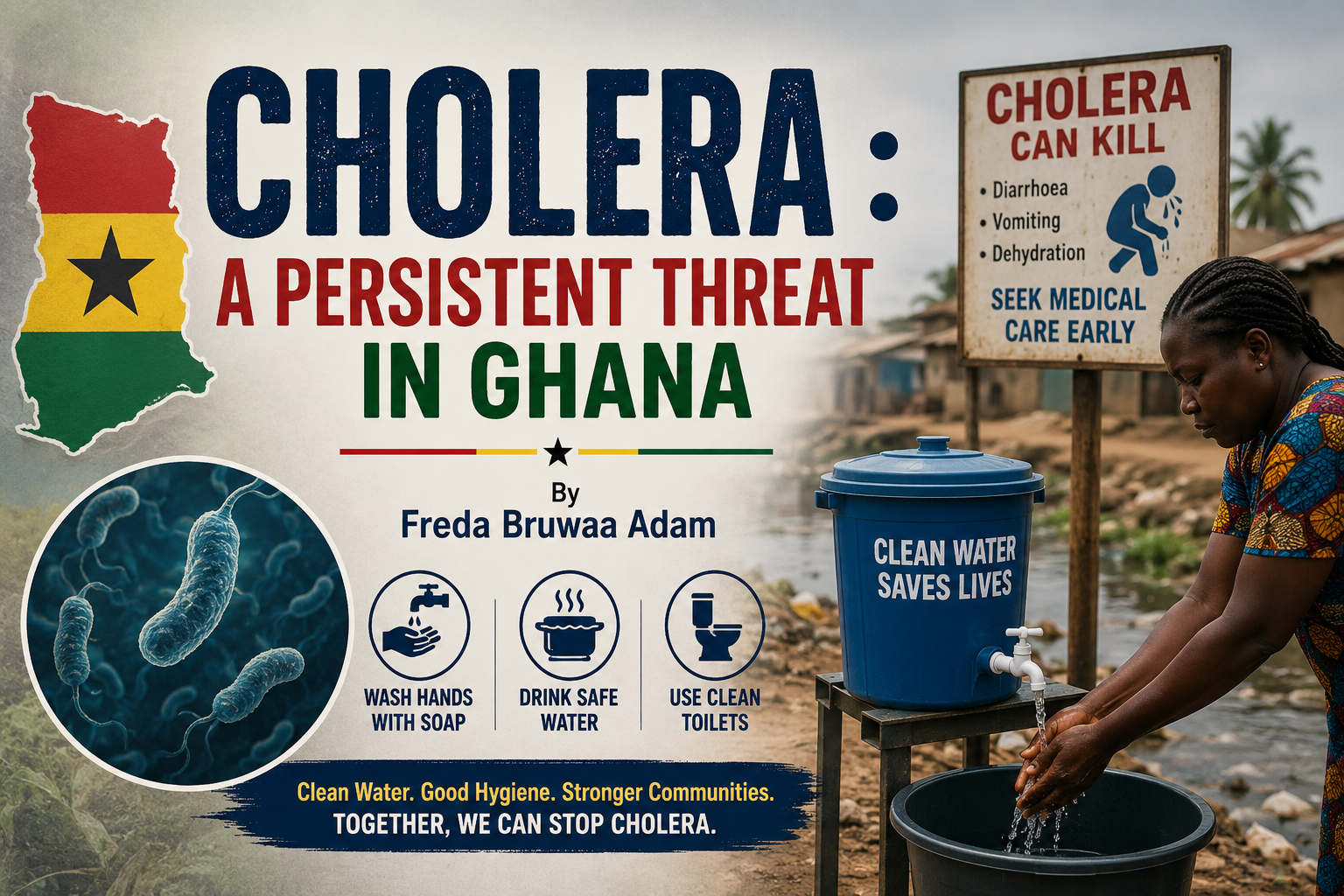
Cholera is a highly infectious bacterial disease caused by Vibrio cholerae. It is often called a " disease of inequity " because it thrives where there is limited access to clean water . It spreads through the ingestion of contaminated food or water and can cause symptoms within hours. While many cases are mild, severe cases lead to " rice-water" stools (pale, milky diarrhea), vomiting, and rapid dehydration, which can be fatal if not treated immediately.
History and the Current 2024–2025 Surge
Ghana has battled recurring cholera epidemics since the 1980s, notably the 2014 outbreak which saw 28,000 cases. However, the situation escalated again in October 2024. As of March 17, 2025, health authorities reported: 6,895 suspected cases and 602 confirmed cases. 51 deaths, highlighting a worrying fatality rate.
Widespread Impact : The outbreak has hit 126 districts across the Greater Accra, Central, Western, Eastern, and Ashanti regions. Madina remains a high-risk hotspot due to its dense population and trading hubs.
The Most Vulnerable: Age 15–24
Data shows that while patients range from infants to the elderly, the 15–24 age group is the most affected. This is likely due to high mobility, frequent consumption of street-vended foods (like salad, waakye, or fufu), and participation in large social gatherings where hygiene standards may lapse.
Critical Challenges: AMR and Sanitation
Two major factors have complicated the current response:
Antimicrobial Resistance (AMR ): Testing shows a staggering 68%–100% resistance to common antibiotics. This means self-medicating with "yellow-and-red" capsules from local chemical shops is dangerous and ineffective; hospital-led treatment is mandatory.
Infrastructure Gaps : With only 30% piped water access in some areas and the aftermath of recent flooding, many residents rely on unsafe tankers or open water bodies.
Response and Prevention
The Ghana Health Service, supported by UNICEF, has activated rapid response teams and vaccinated over 596,205 people with the Oral Cholera Vaccine (OCV). The GHS, in partnership with WHO and UNICEF, deployed massive OCV campaigns in high-risk hotspots. In districts like Sekondi-Takoradi and Madina, these campaigns achieved over 92% coverage, leading to a "remarkable decline" in new infections.
How Effective is the Vaccine?
The oral vaccine typically Euvichol-Plus or the newer Euvichol-S in Ghana is a powerful but temporary tool: High Real-World Protection: In active outbreak settings, the vaccine has shown a protective effectiveness of approximately 87% to 93%.
One vs. Two Doses : Single-Dose: Due to global supply shortages, many in Ghana received a single dose in 2024–2025. This provides strong short-term protection (up to 1 year), making it ideal for stopping an active surge.
Two-Dose : A full two-dose regimen (taken 14 days to 6 months apart) extends immunity for 3 to 5 years.
Age Matters : While highly effective for adults and children over five (up to 79% protection), effectiveness is notably lower in children aged 1–4 years . This makes household sanitation even more critical for protecting the very young.
Important Limitations : It’s Not Instant: It takes about 7 to 10 days after swallowing the vaccine for the gut's immune system to be fully primed. Waning Immunity: Protection is not permanent; it begins to fade after 2–3 years, meaning long-term safety still relies on WASH (Water, Sanitation, and Hygiene). Complementary Tool: Experts emphasize that the vaccine "buys time" to fix infrastructure. Even if vaccinated, you must continue boiling water and washing hands, as the vaccine does not offer 100% immunity.
What You Must Do:
1.Drink Safe Water : Drink only bottled, sachet, or treated water. If using tap or well water, boil it for at least one minute.
2.Strict Hygiene: Wash hands with soap under running water after using the toilet and before handling food.
3. Food Safety : Avoid cold, exposed street foods. Reheat leftover food until it is steaming hot.
4.Recognize the "Red Flags": If you notice sunken eyes, extreme thirst, or muscle cramps, seek help immediately.
Immediate Action for Symptoms
If diarrhea starts ,do not wait. Start drinking Oral Rehydration Salts (ORS) immediately to replace lost fluids. If ORS is unavailable, a homemade solution of sugar and salt mixed with safe water can be used until medical care is reached. Head to the nearest health facility immediately—cholera is treatable, but time is of the essence.
As we move into 2026, over 93 districts, including the Madina Municipality, remain under active surveillance. Continued investment in drainage and clean water infrastructure is the only way to break this cycle for good.